18.11.2026
Our latest project with the Kunstmuseum Basel explores a particularly fascinating subject. This time, the focus is not on the paintings themselves, but on their provenance – the history of their ownership. Particularly in the context of the Nazi era, the provenance of artworks raises a number of far-reaching questions.
How exactly did the paintings come to the museum? Who owned them before? What role did the Nazi dictatorship play in their histories? Have their chains of provenance been fully established – in other words, can the exact sequence of previous owners be traced?
These are some of the questions explored in the audio tour. It examines, for example, paintings that were looted from their Jewish owners during the Nazi era, as well as works that were taken from them under duress. Other artworks were sold by Jewish refugees after they had escaped Nazi-controlled territory, either to secure their livelihoods or to finance their flight. One of the tour’s central aims is to acknowledge the experiences of these former Jewish owners and honour their memory. Where artworks were lost as a result of Nazi persecution, the Kunstmuseum Basel reaches out to the heirs to seek just and fair solutions.
Some of the provenance stories concern works that were ridiculed in the Nazi exhibition Degenerate Art (Entartete Kunst) and later auctioned in Switzerland. Other paintings survived the Nazi era only thanks to the dedication of passionate art lovers.
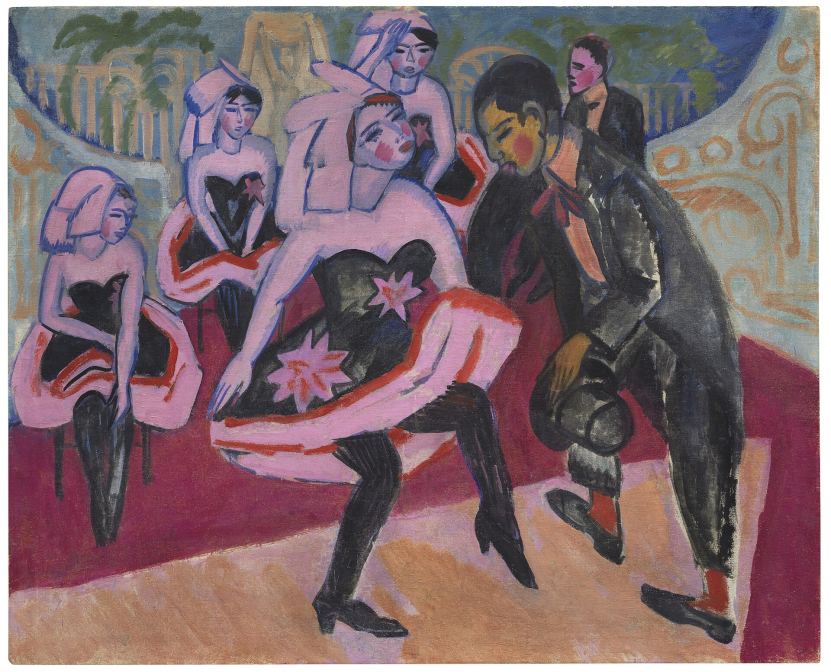
Ernst Ludwig Kirchner’s Tanz im Varieté (Dance at the Variety Theatre) was considered lost for decades before being acquired at auction in 2024 by the Im Obersteg Foundation, whose collection is on deposit at the Kunstmuseum Basel.
More about the fascinating story behind this painting will be revealed soon in the audio guide! In the meantime, the museum has already shared some insights in a video.
Ernst Ludwig Kirchner: Tanz im Varieté, 1911